Most restaurant fabrication runs on a six-week clock. A surprise — a health-department fail, an equipment collision, a fire, an unscheduled inspection — doesn't respect six weeks. The conversation moves from scheduling to triage. Here's what a 24-hour stainless turnaround actually looks like, when it's possible, and when it isn't.
When overnight is possible
Three conditions have to be true.
The material is on a shelf somewhere reachable. 14-gauge 304 sheet stock in standard sizes (4'×10', 4'×12') lives in service-center inventory in most US metros. If the spec calls for a non-standard grade or thickness, the clock restarts. A non-standard material call kills overnight feasibility before the conversation starts.
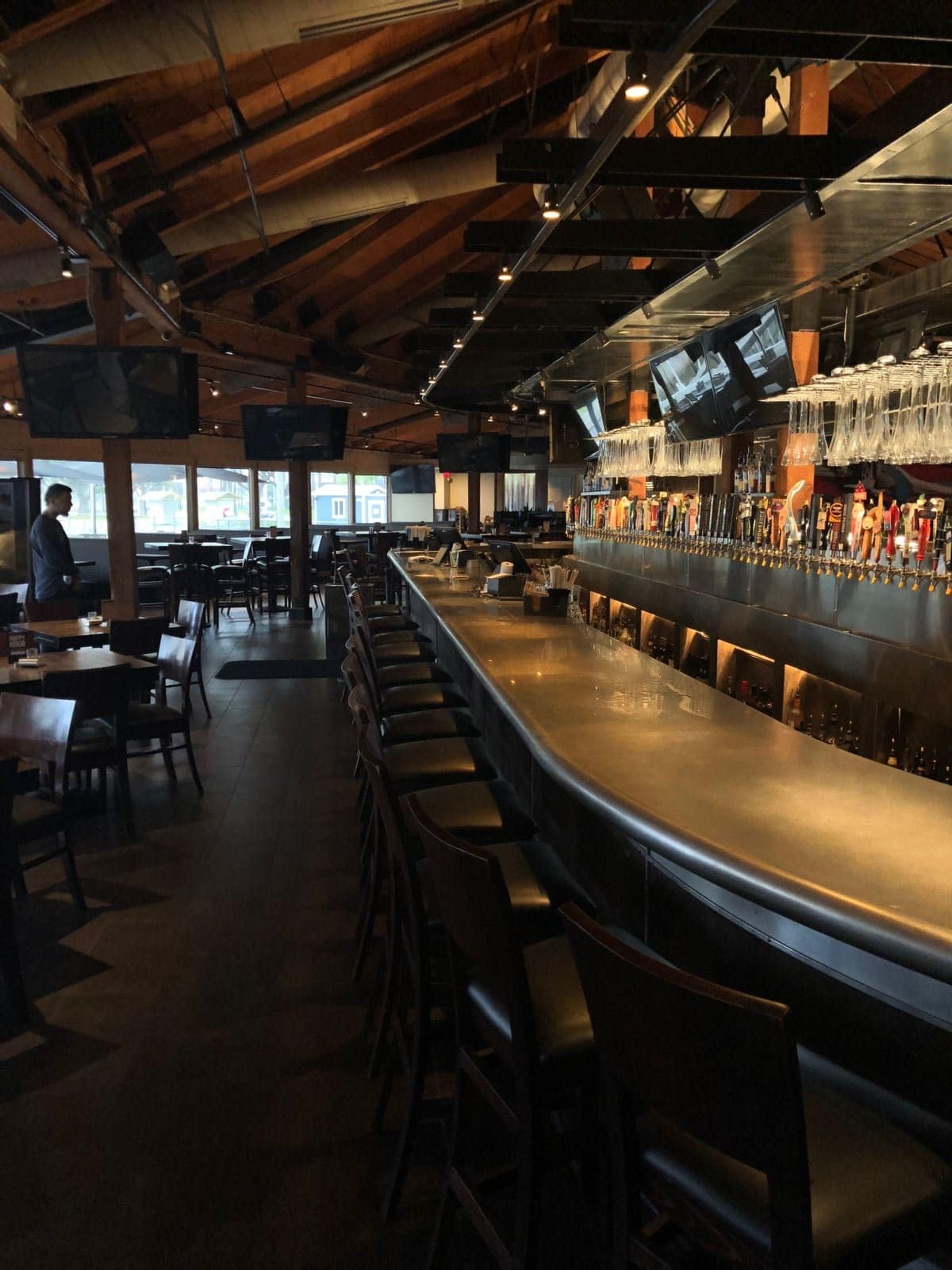
The damaged piece is replaceable as a modular unit. A full custom bar with curved geometry can't be rebuilt overnight. A 6' service-side panel with straight cuts and a 3" bullnose can. The more modular the original build, the more rebuildable it is under pressure. This is one of the reasons we design for repair on the original install — year-five overnight scenarios are easier to solve when year-one decisions assumed they might happen.
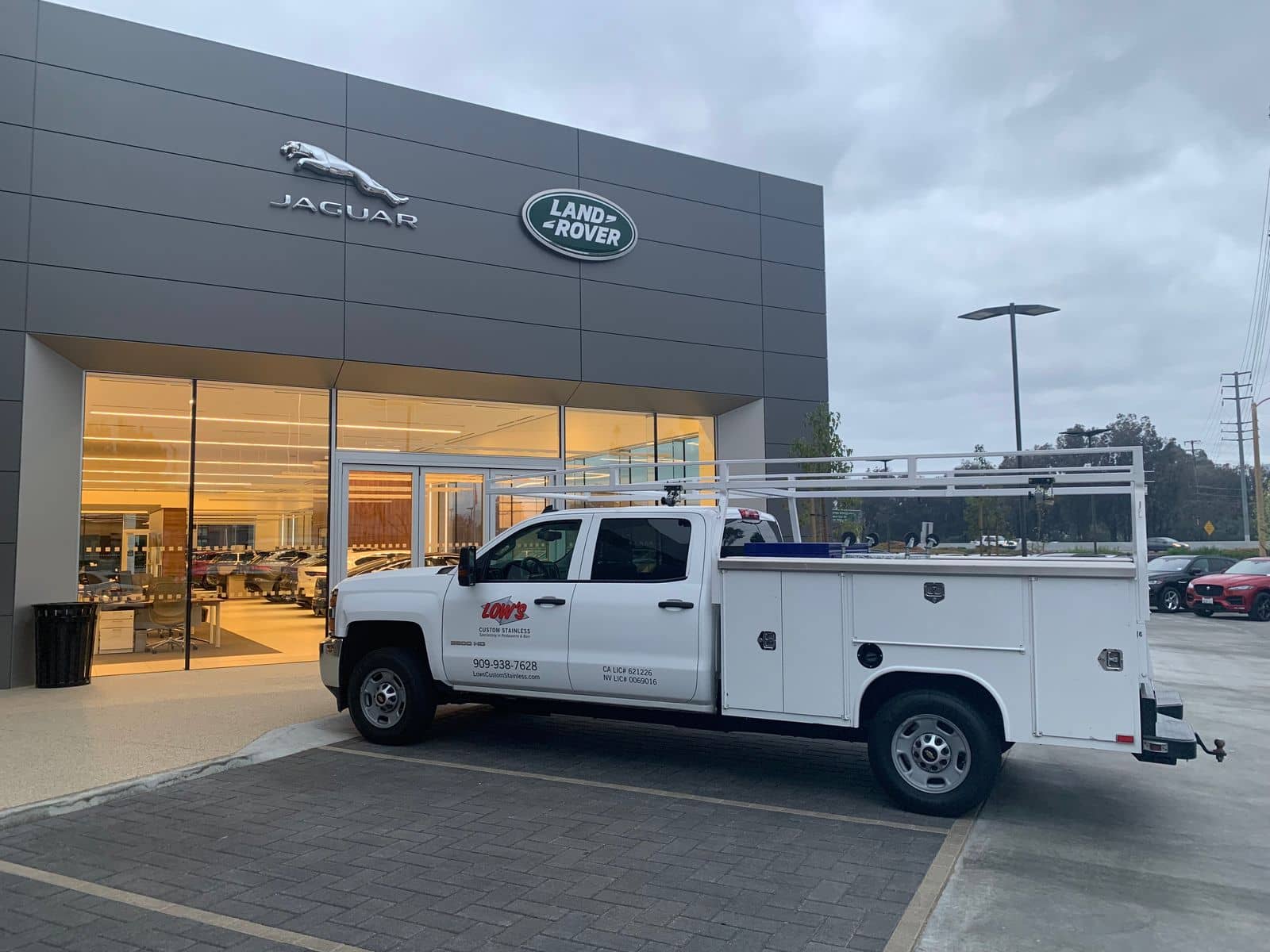
The install crew can be on site within the window. A national install team with people across multiple time zones makes this feasible. A regional shop without travel-ready installers usually can't.
If all three are true, overnight is real. If one isn't, the realistic minimum is 72 hours.
What gets compressed — and what can't
A normal install runs through: site survey → drawings → material order → cut and form → weld and finish → passivation → QC → ship → install. A 24-hour install compresses every step and skips a few.
What gets compressed:
- Drawings. Existing templating from a prior visit (if one exists) gets pulled from the file.
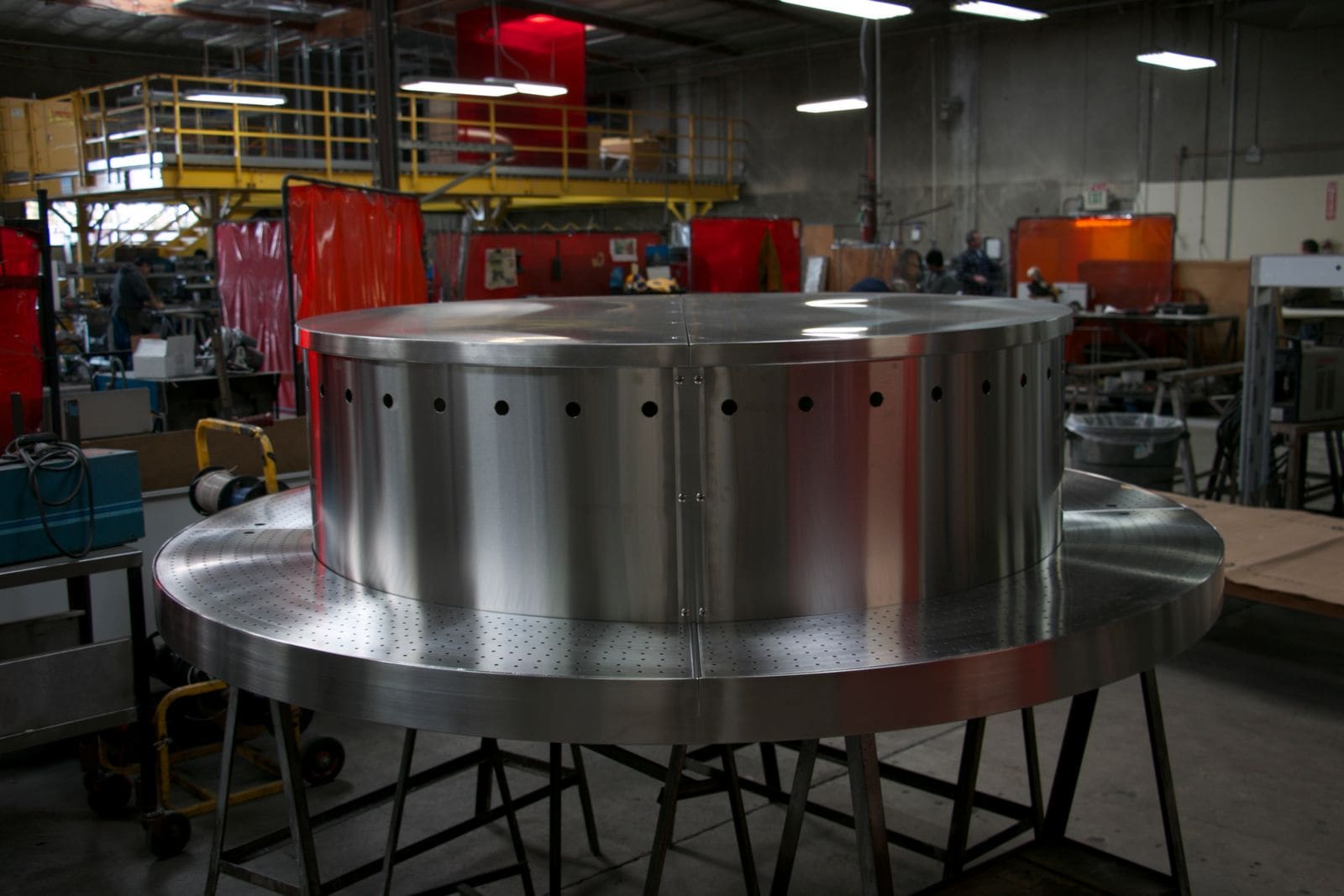
- Cut and form. Partner shops with priority queue access (the trade-partner network) reprioritize the job into their next shift.
- Finish. Final M5 finishing happens on the install site, not in the shop.
- Passivation. Field passivation per ASTM A967 with citric application and rinse, run under tarp if needed.
What can't be compressed:
- Material availability. Either it's on a shelf or it isn't.
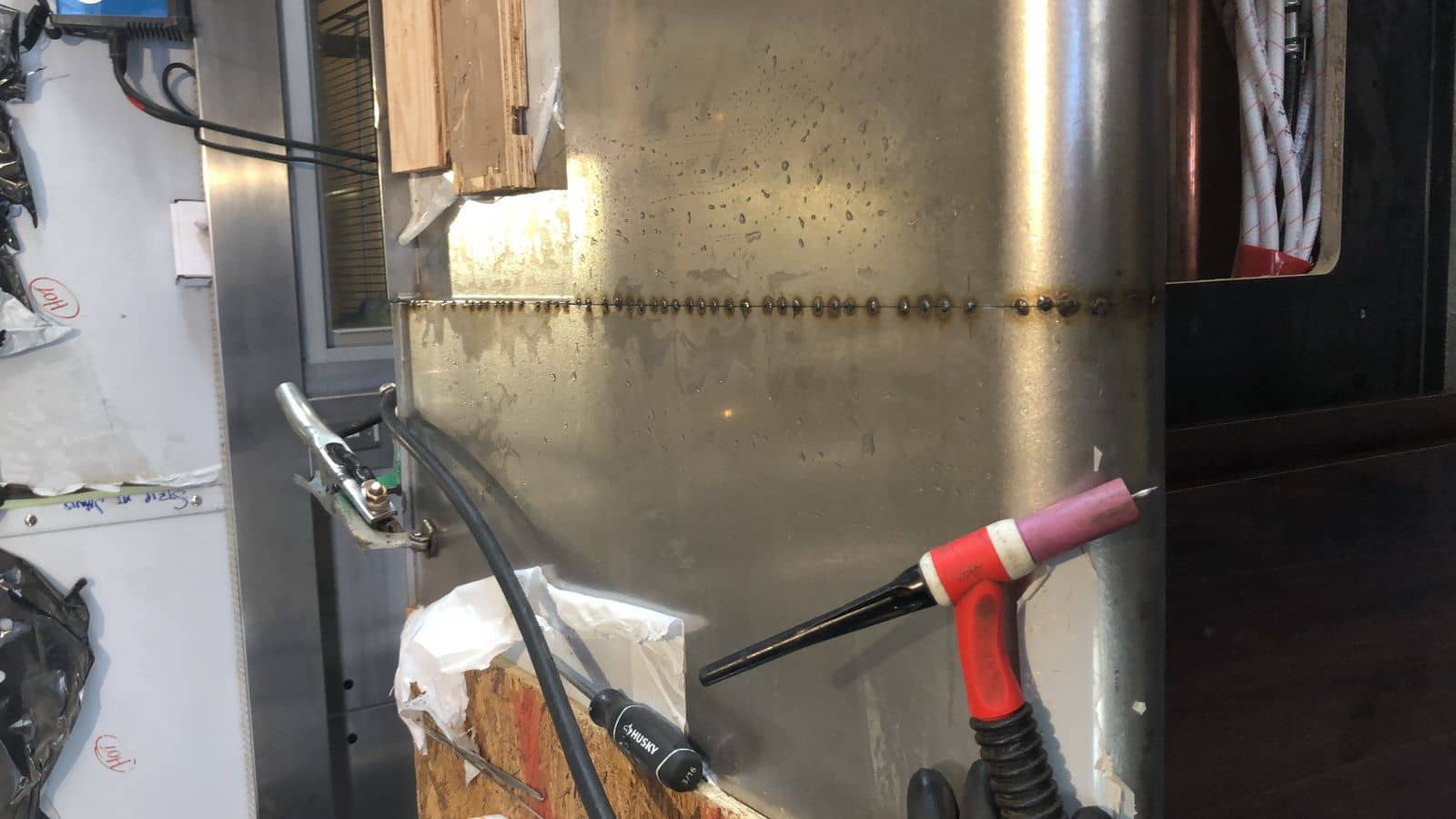
- Weld cool-down. A weld has to cure before it can be polished. There's no shortcut.
- Sub-bar substrate. If the substrate is damaged too, the timeline becomes a structural-repair problem, not a stainless problem.
The crew at 2 AM
The install runs the same sequence as a daytime install — substrate, dry-fit, weld, finish, QC — but compressed and lit by mobile work lights. The crew is smaller (usually 2–3 people), more senior, and selected for the specific weld and finish skills the job needs. Nobody's learning anything on a 2 AM emergency install.
QC under raking light still happens. The light is portable, the conditions aren't ideal, and the standard is still the standard. If the panel doesn't pass under raking light, it doesn't get signed off, even at 4 AM. The operator opens with a clean install or they don't open.
Cost structure
Emergency turnaround pricing has three components:
- The base fabrication cost for the modular piece
- A rapid-response uplift covering after-hours labor, partner-shop priority queue access, and expedited freight
- A travel-crew mobilization fee if the install team is flying in
The total typically runs 2–3× a scheduled install of the same scope. The operator's question isn't whether the premium is worth it on principle — it's whether one additional day of closure is worth more than the premium. For most operators above a certain volume, it is. For some, it isn't.
We'll quote the premium honestly and let the operator decide.
How to set up an emergency-ready relationship before you need one
The fabricators who can deliver a 24-hour turnaround can do it because their templates, finish recipes, and substrate documentation are already on file from the original install. If we did your original bar, we can rebuild a damaged section without retemplating. If we didn't, the first call sets up the templating relationship that makes a future emergency response possible.
The relationship to set up before you need it: a baseline templating visit, an as-built drawing set in the file, and a known finish recipe. Six hours of pre-work saves six days during a crisis.
Bottom line
Overnight stainless installation is real, but it's not the standard product. It's a service most fabricators can't offer because the input requirements — material on the shelf, trade-partner priority, install team mobility, documented original spec — aren't structurally there for them.
If you operate enough locations that surprises are a probability, set up the relationship before the surprise. Six hours of templating now is the difference between an open service tomorrow and a closed week.
Most of the after-hours work that runs through our shop happens between 11 PM and 4 AM, because that's when restaurants are dark and the install can happen without interrupting service. The shop coffee maker is always on.
Everything on this blog comes off our shop floor and our job sites — 33 years of commercial stainless for In-N-Out, Yard House, SoFi Stadium, and 2,000+ builds across 35 states. If you're planning a project, we'll give you a straight answer on what it takes.