A stainless fabricator's bid lists "installation" as a line item. The number next to it is the same in every bid. What changes between fabricators is who actually shows up to do that install — and that's the question the bid doesn't answer.
If the templater and the installer share a paycheck, the mistakes get caught. If they don't, the mistakes get billed back to you. That's the structural difference between two operating models. Both call it "installation included."
Two install models, side by side
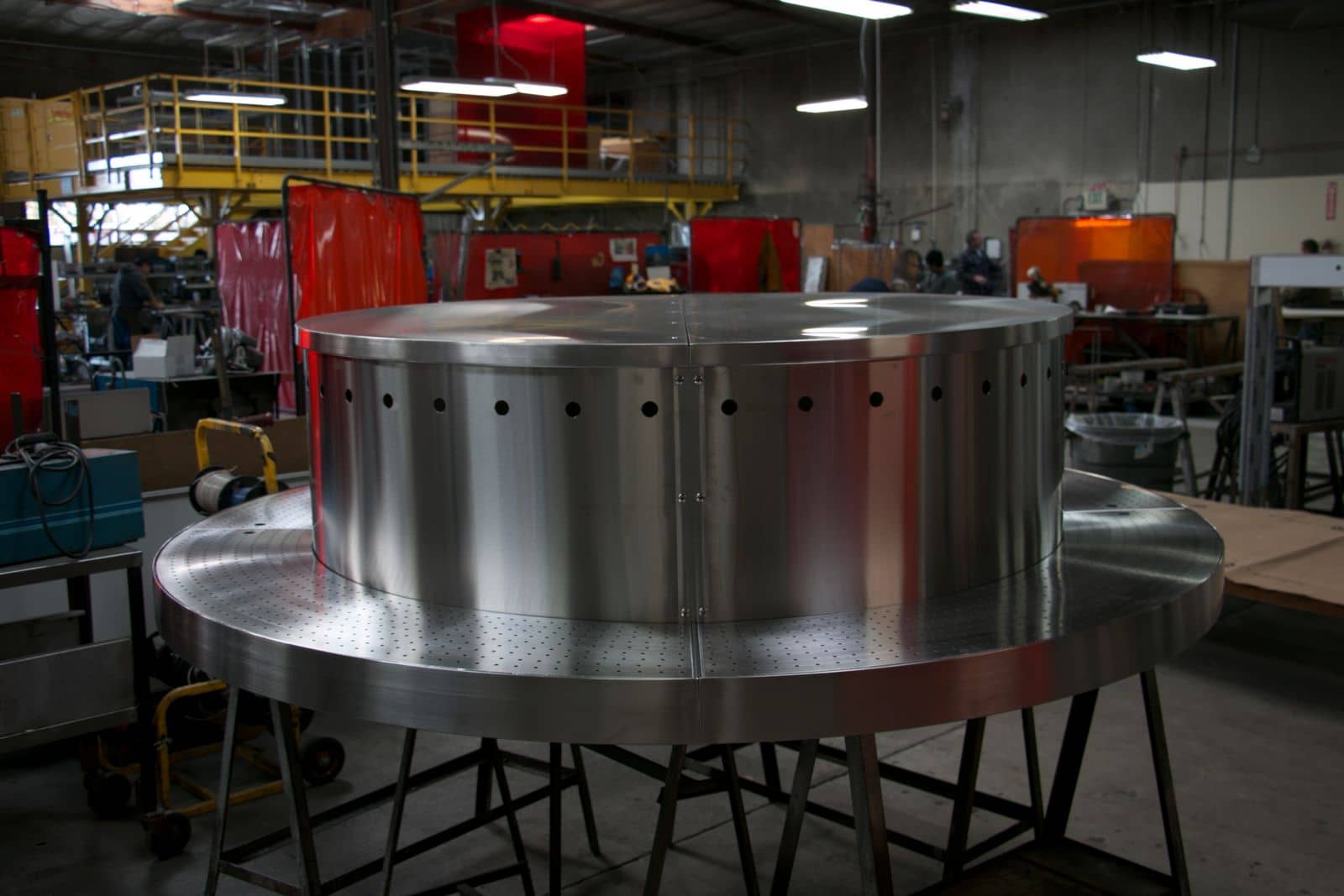
Model A — fabricator with in-house install team. The crew that templates the bar is the same crew that fabricates the panels and the same crew that flies out to install. One paycheck, one trainer, one finish standard. The lead installer on your job has run the welds in the shop, knows where the seams are, and recognizes the finish recipe.
Model B — fabricator with a subcontracted install crew. The shop fabricates the panels and ships them. Local installers — usually a regional sheet-metal sub, sometimes a general handyman crew with a stainless side gig — get hired by the fabricator to do the install. Different paycheck, different trainer, different prior experience with the specific job.
Both models say "installation included" on the bid sheet. The number on the line is comparable. The structural setup behind the number is not.
The accountability problem
A mistake on install day — a scratched panel, a forced fit, a missed dimension — has two possible owners: the fabricator and the installer. When the installer is on the fabricator's payroll, there's only one party to talk to and the fix is on their nickel.
When the installer is a sub, the accountability chain breaks at the install. The fabricator says it was the installer. The installer says the panel arrived that way. You're the one writing checks for the resolution.
This isn't theoretical. The most common warranty dispute in stainless install isn't about whether something failed — it's about who's responsible for the failure. Subbed installs produce more disputes because the chain of custody isn't continuous.
The Construction Industry Institute has documented this same pattern across trades: every hand-off in a construction sequence is a probability of a dispute. The math doesn't change because the trade is stainless.
What an in-house crew does differently
Three things, mostly invisible from the bid sheet:
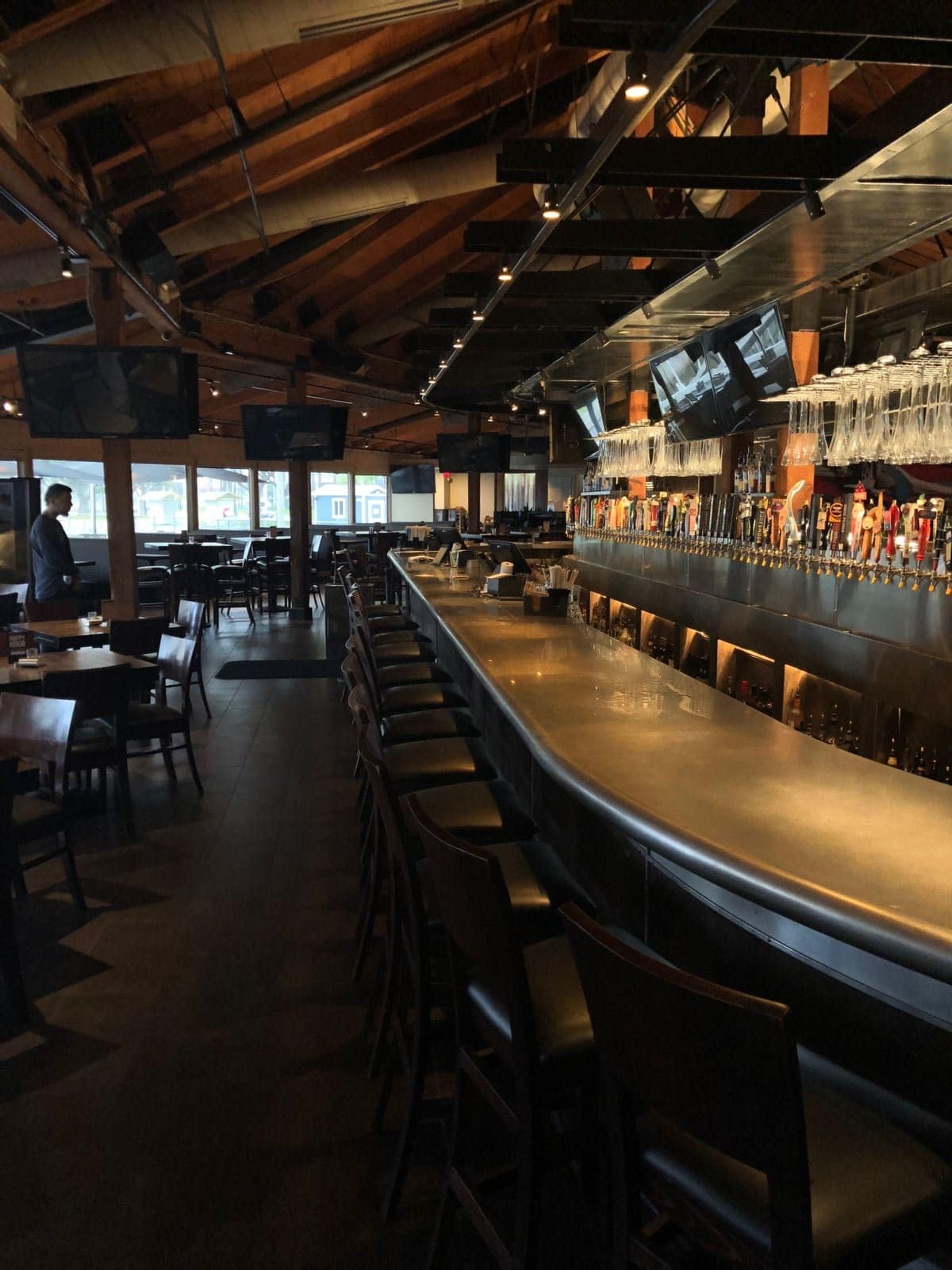
They know the templates. The templater walked the room with the lead installer in advance. The crew shows up knowing where the floor sloped, which wall was out of plumb by 3/8", and which corner the design adjusted to dodge an HVAC duct. The drawings are accurate because the people who took the measurements are on the truck.
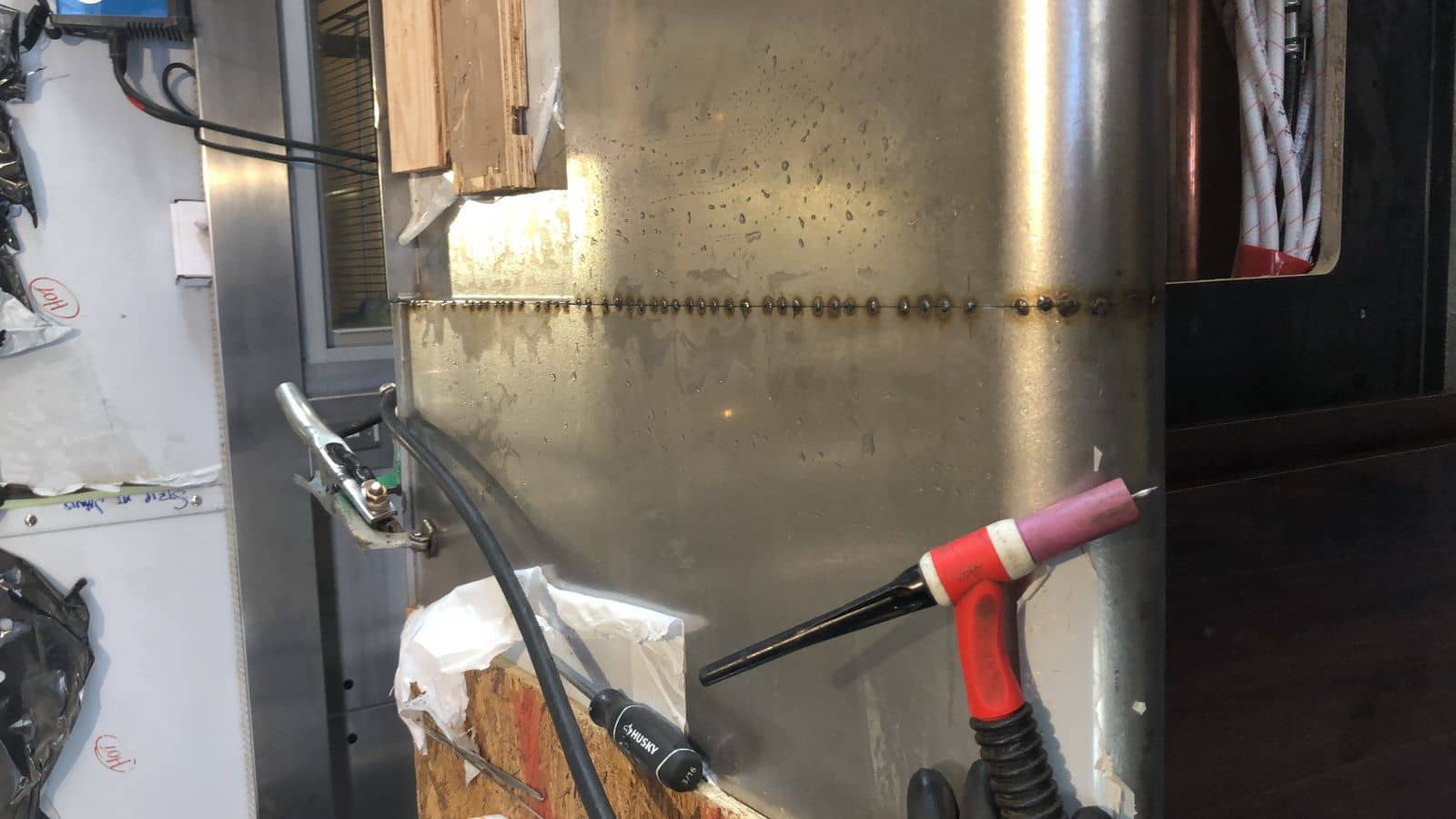
They know the welds. The welder who closed the back seam on a wraparound bar top will know on install day whether that seam is going to clear an unforeseen post. If a substitution is needed, they can re-weld in the field with the same procedure, same wire, same back-purge gas as the shop weld. A subbed installer can't.
They know the finish. The polisher who ran the M5 figure-eight recipe in the shop will catch a panel that came out of the crate scuffed during freight. They'll touch up the scuff in the field with the same two-sander technique that built the original. A subbed installer at a stainless job sees scratch concealment for the first time and pulls out a buffer.
The aggregate of those three "they knows" is the difference between an install that lands clean and an install that produces a punch list.
Why we fly the install team — and the math behind it
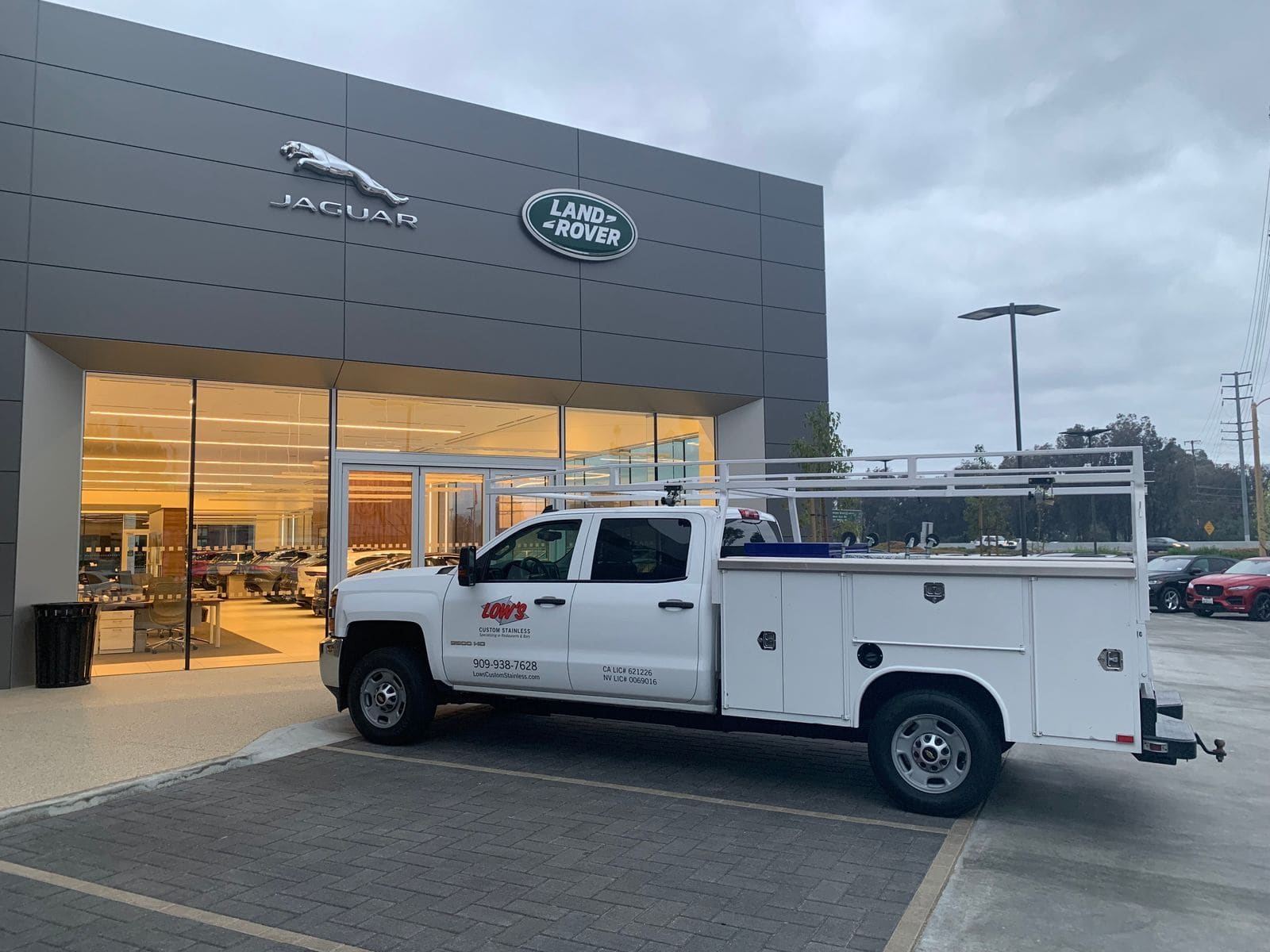
For the 35+ states we install in, the install team flies. The same lead installer who set the bar at a Phoenix location flies to the Boston location two weeks later. The travel cost is real and shows up in the bid.
The math is: a sub-crew on the ground is cheaper per install day but produces 2–3 punch-list items per install. Each item triggers a return trip, a freight cost, and a customer-facing apology. By the third or fourth job in a sequence, the sub-crew model is more expensive and the customer is annoyed.
The flying-crew model has a higher per-install travel cost, near-zero punch-list rate, and a customer who calls us for the second location because the first one was easy.
That math is why our install team has been the same nucleus of people for two decades. Their per-job overhead is high. Their per-job rework cost is near zero. Across a multi-unit build, the second number swamps the first.
The 4-question test for "installation included"
Run these questions on any bid that includes installation:
- "Is the install crew on your payroll, or are they a sub?" A real answer is one word. A hedged answer is the answer.
- "Will the lead installer be one of the people who templated the job?" Templating-to-install continuity is the cleanest predictor of a clean install.
- "If a panel arrives scratched, who repairs it on site, and how?" A real shop says "we touch up in the field with the same finishing technique we used in the shop." A sub-only shop says "we get the fabricator to ship a replacement."
- "On day 30, who do I call?" A real shop answers with a name and a phone number. A sub-only shop answers with a process.
Three out of four good answers is a shop worth talking to about price. Two or fewer is a shop with structural risk built into the install.
What this changes about the warranty
Most fabrication warranties cover the panel from the shop. Almost none of them cover the install when the install is subbed. Read your warranty document carefully — the language "warranty void if not installed by an authorized installer" is doing a specific thing. It's saying that the only authorized installer is the fabricator's own crew, and if you've allowed the fabricator to sub the install, the warranty has a hole.
A fabricator with an in-house install team warrants the full system — panel and install — because they have control over both. A fabricator who subs has an incentive to scope the warranty narrowly, because they can't control the install.
When you compare two warranty documents that look similar on the cover page, the install-coverage clause is where the difference actually lives.
Bottom line — installation isn't a line item, it's a relationship
The line item on the bid is comparable. The structural model behind the line item isn't. An in-house install crew is a multi-year investment a fabricator makes in being able to stand behind their own work. A subbed install crew is an outsourced workflow that lowers per-job cost and raises per-job risk.
Both can produce a successful install. Only one of them shares the consequences if it doesn't.
Ask the question before you sign. The number on the line won't change. The product behind it will.
The lead installer on most LCS jobs has been on the truck since before half our shop was hired. He carries his own air tools, even though we provide them, because the ones he carries are tuned to his hands. That's what an in-house crew looks like.
Everything on this blog comes off our shop floor and our job sites — 33 years of commercial stainless for In-N-Out, Yard House, SoFi Stadium, and 2,000+ builds across 35 states. If you're planning a project, we'll give you a straight answer on what it takes.