If you've never bought stainless before, the bid you're about to receive is full of words that look like they mean something. Most of them do — to other fabricators. To you, "satin #4 finish on 16 ga 304 with TIG-welded back-purged seams" is going to read like a sentence that may or may not be true and that you have no way to verify.
You can verify it. The questions are short. The answers separate fabricators who are selling you a product from fabricators who are selling you a price.
Here's the pre-flight checklist for a stainless project, in the order the decisions actually get made.
Scope — what are we actually buying?
Stainless can show up in seven places in a restaurant:
- The customer-side bar top
- The service-side bar (back of bar, kick rail, service well)
- POS surrounds
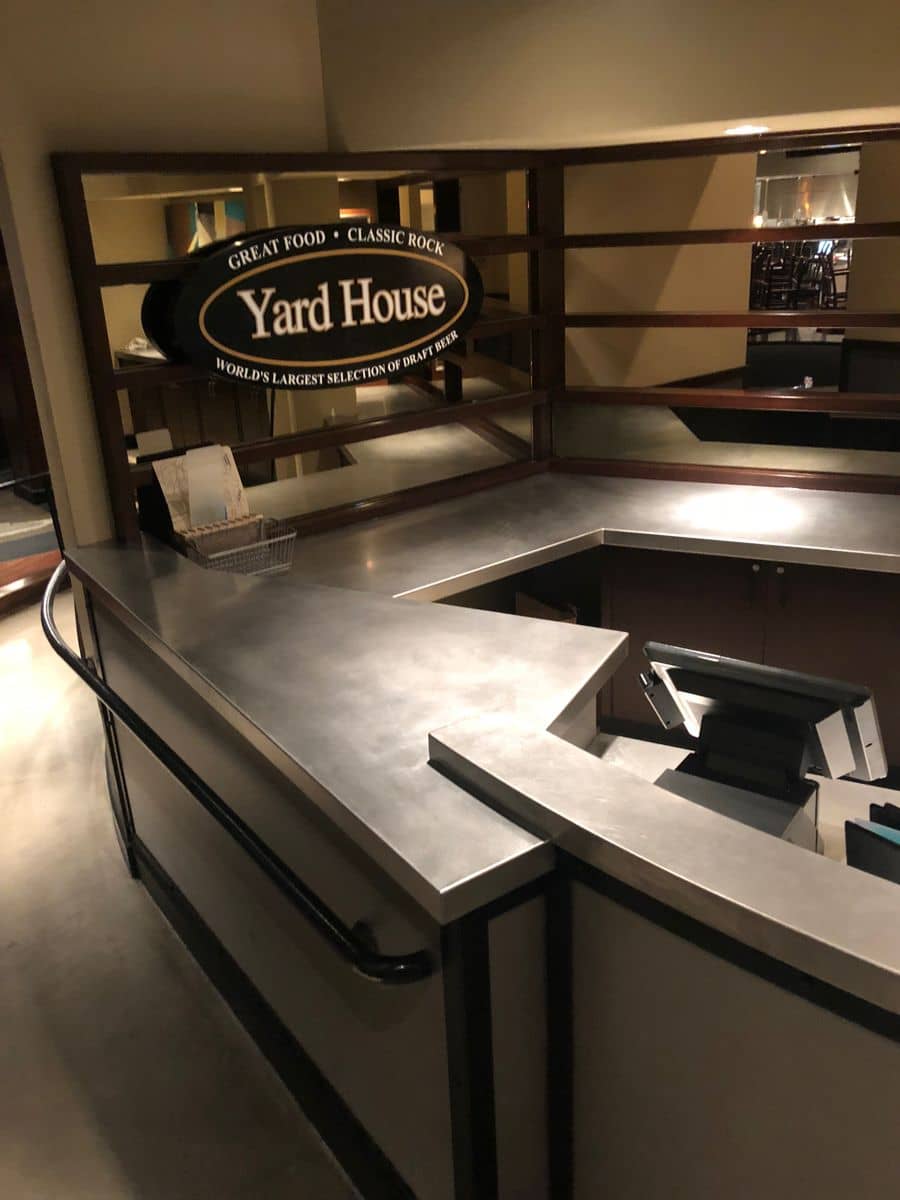
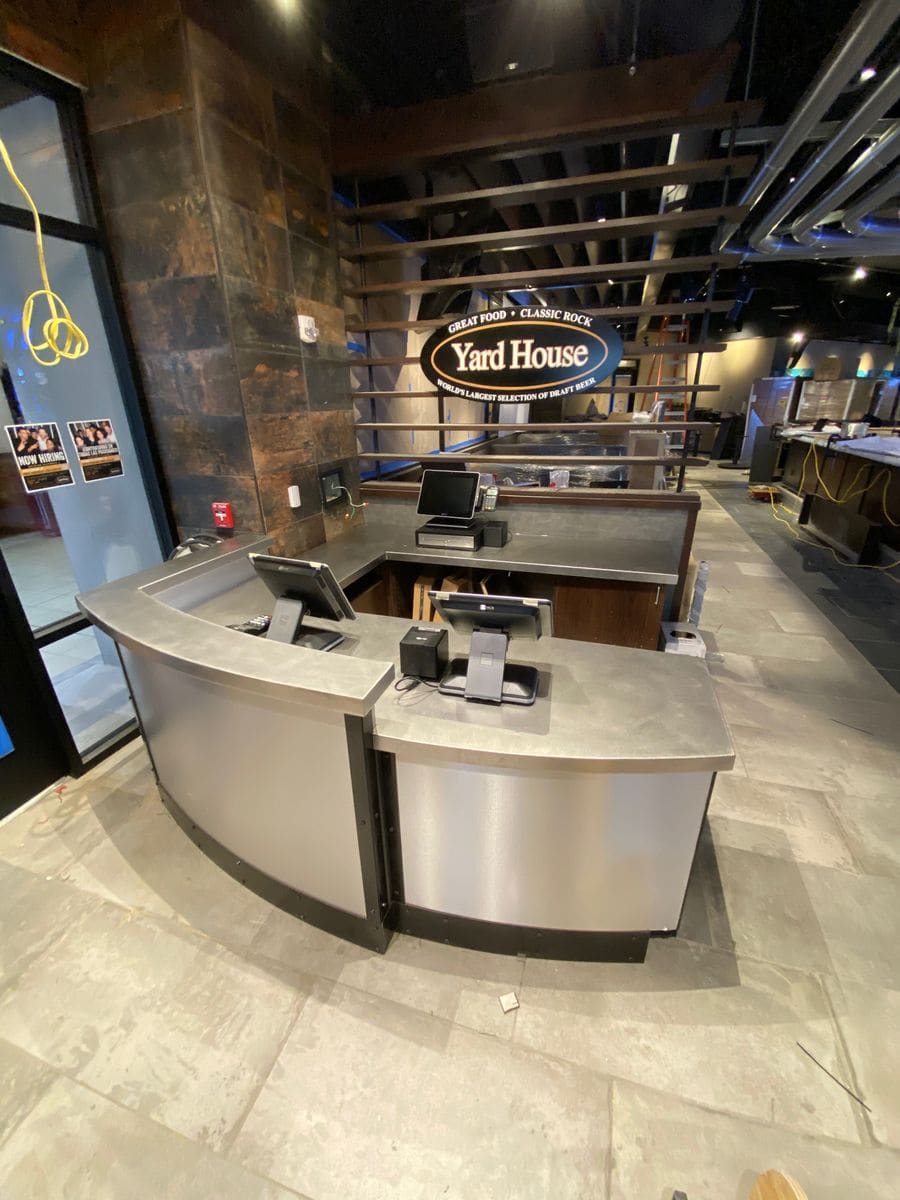
- The hostess stand
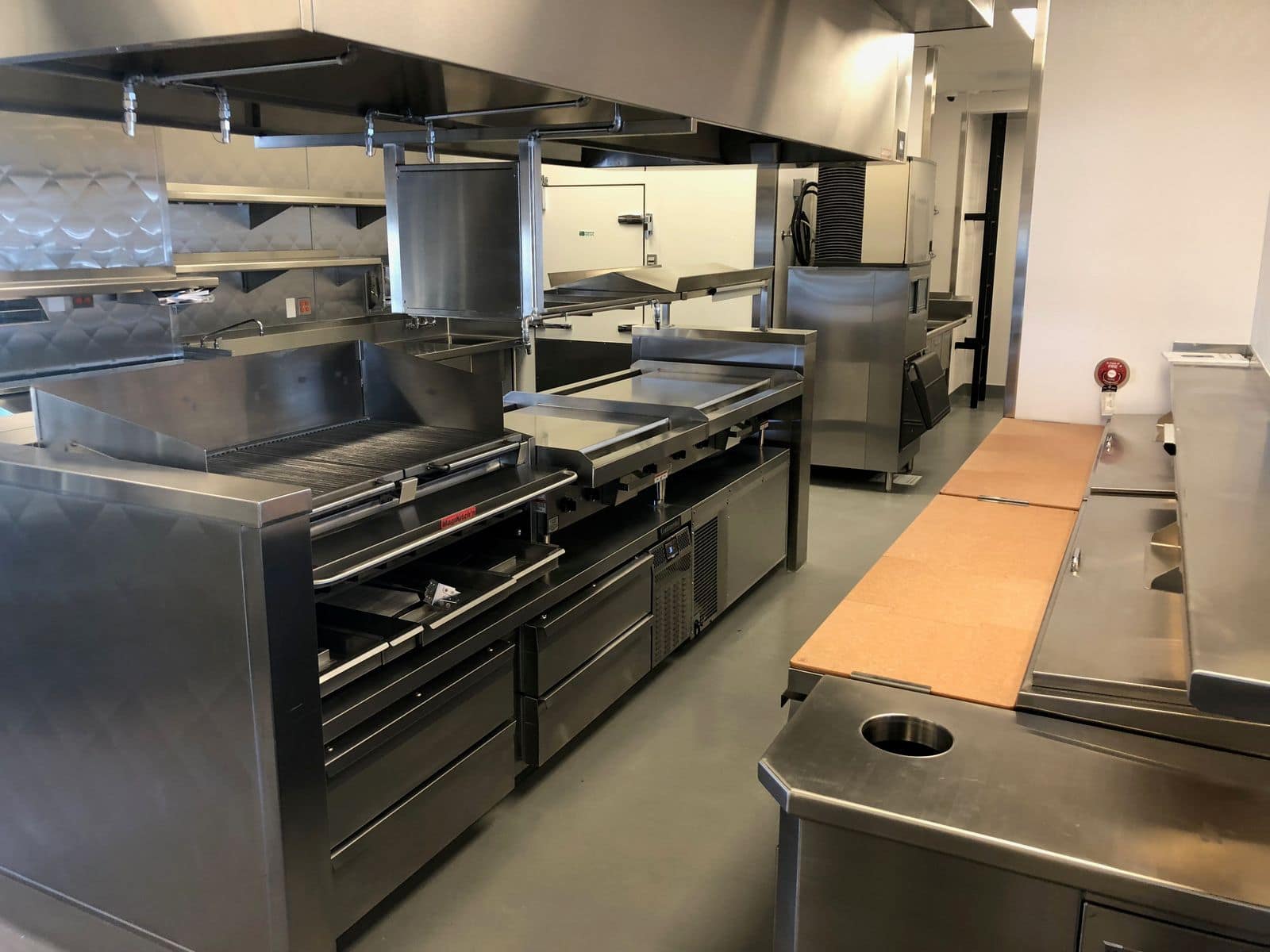
- Back-of-house counters and prep tops
- Equipment fronts and skirting
- Tabletops (rare in restaurants, common in cafés)
Each of those has a different spec. A "stainless package" bid is often vague about which ones are included. Get a line-item list, in writing, before you compare prices. Two bids labeled "stainless package" can be different scopes.
Budget — what's the realistic price range?
A custom stainless bar top runs $600–$1,200 per square foot installed, depending on:
- Grade (304 standard, 316 for marine or healthcare adjacencies)
- Gauge (14 ga premium, 16 ga standard, 18 ga budget)
- Edge profile (3" bullnose is the default; mitered or marine edge add cost)
- Finish (M5 Oracle Sand and similar documented recipes run 15–25% over generic swirl)
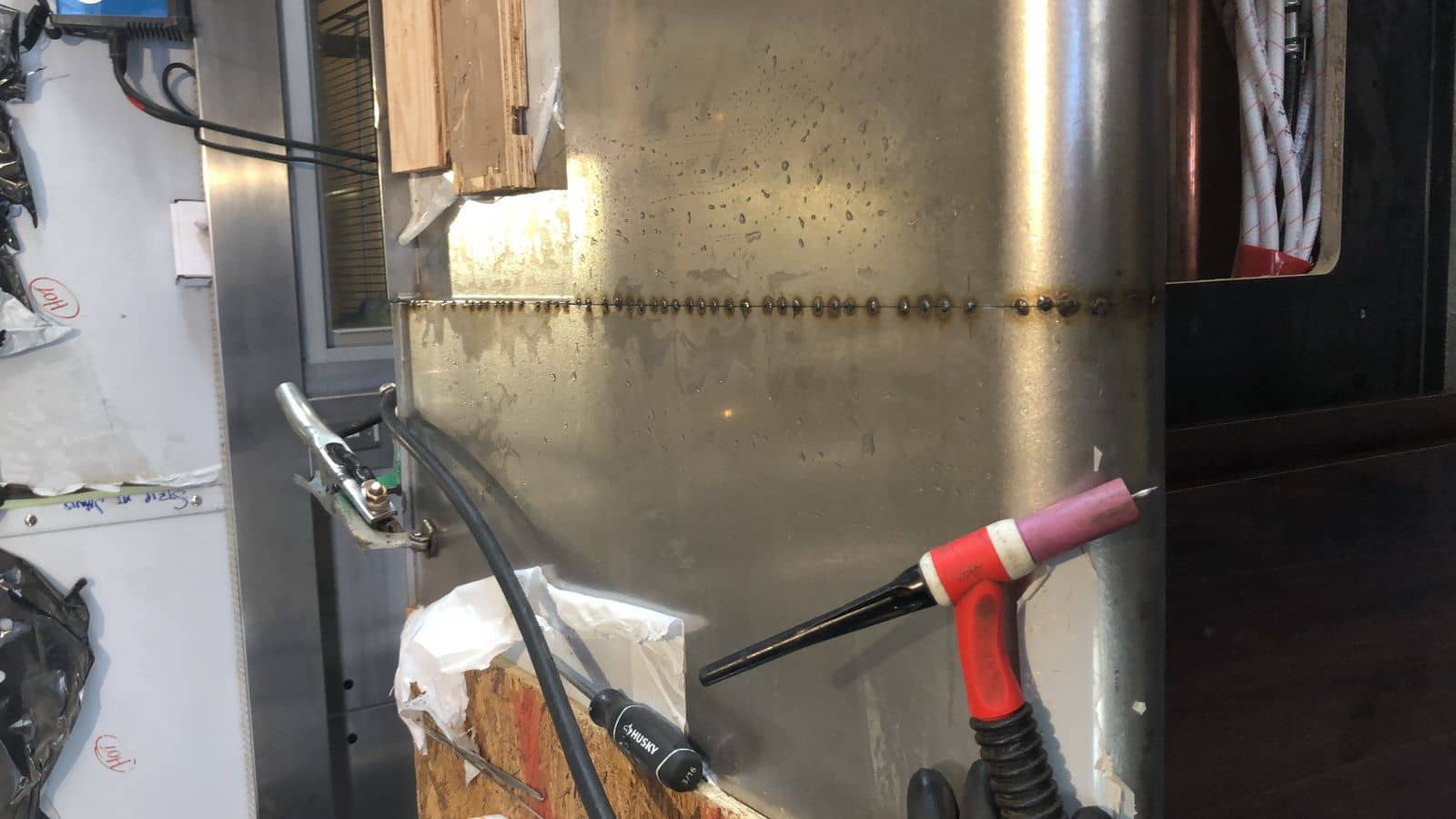
- Welding (TIG with argon back-purge is the standard; MIG is a cost-cut that costs you in service)
- Install (in-house install crew runs 10–15% over subbed install but produces fewer punch-list items)
A bid under $500/sq ft installed means at least one of those line items is being compressed. Sometimes that's fine for a back-of-house application. For a customer-side bar top, it almost never is.
The full ROI math — including downtime, repair, and replacement — lives in The True ROI of Custom Stainless. The short version: cheap day-one bids almost always cost more over a 10-year service life.
Schedule — what's the realistic lead time?
Standard lead time on a custom stainless bar top is 5–14 days from spec lock-in to install. Within that range:
- 5–7 days is feasible when material is on a service-center shelf in the standard grade and the fabricator runs a trade-partner network that gives them priority queue access at the cutting and forming shops.
- 10–14 days is normal when material has to be ordered to spec or when geometry is complex (curves, multiple penetrations, integrated equipment).
- Anything over four weeks means the fabricator's queue is loaded — fine for a build-out with no schedule pressure, expensive for one with a slipping CO date.
- Anything under three days is a red flag. Either the spec is being compressed or the QC steps are being skipped.
If your build-out schedule is tight, ask the fabricator for a phase-by-phase timeline (spec, material, cut, weld, finish, passivation, install). The fabricator who can produce that breakdown is the one who's running an organized shop. The fabricator who can't is guessing.
Material — 304 or 316, what gauge, what finish?
Grade: 304 is the standard for restaurant work. 316 is appropriate for coastal locations (chloride exposure) and healthcare-adjacent installations. 430 is not appropriate for any customer-side or food-contact application — it pits under chloride exposure and reads as rust within 12 months in many environments.
Gauge: 14 ga (0.0747") is the customer-side standard. 16 ga (0.0598") is fine for back-of-house and most equipment fronts. 18 ga (0.0478") is budget — it oil-cans under hand pressure and dents under glassware. Never spec 18 ga for a customer-side surface.
Finish: Hairline is dressy and unforgiving. #4 satin is the workhorse and hides moderate wear. Mirror is dramatic and shows every fingerprint. M5 Oracle Sand (our documented two-sander figure-eight recipe) hides scratches by removing parallel reference lines. For a customer-side bar top, finish selection is the decision that determines what year five looks like.
The full grade/gauge/finish primer is in the bar-top ultimate guide.
Install — who's the install team and on whose payroll?
This is the question most bids do not answer in writing. Ask it explicitly:
- Is the install crew on the fabricator's payroll, or is it a subbed local crew?
- Will the lead installer be one of the people who templated the job?
- What's the warranty path if a panel arrives scratched?
A fabricator with an in-house install team can answer all three in one sentence each. A fabricator who subs the install will hedge on at least two. The structural differences are walked through in In-House Install vs. Subcontracting. Short version: the subbed-install model is cheaper per install day and more expensive per project because the punch-list rate is 2–3× higher.
Documentation — what do you get to keep?
Five documents should land in your binder at install:
- Mill test report — the ASTM A240 chemistry certificate proving the steel is what was specified.
- Finish recipe reference — for a documented finish like M5, the recipe document the fabricator can re-run in year five.
- Passivation record — the ASTM A967 test cell results, including the Cr:Fe ratio (above 1.7 is the standard).
- As-installed photos — a complete set under restaurant lighting.
- Cleaning and maintenance protocol — printed, ready to tape inside the cleaning closet.
If a fabricator can't or won't produce these documents at install, the install isn't finished, regardless of whether the panels are bolted down. The documents are the difference between owning the stainless and owning the story of the stainless.
A one-page pre-flight checklist
Before you sign any stainless bid, verify:
- Scope is line-itemed in writing
- Grade is specified (304 or 316)
- Gauge is specified per surface
- Finish is specified by name, not by description
- Weld method is specified (TIG with argon back-purge)
- Passivation per ASTM A967 is in the spec
- Install crew is on the fabricator's payroll
- Lead times are phase-by-phase
- Warranty document covers both fabrication and install
- Five documents land in your binder at install
A bid that satisfies all ten is a real stainless bid. A bid that misses any three is a price quote, not a project.
Bottom line
The fabricator's job is to build the bar top. Your job, before you sign, is to make sure the spec is precise enough that you're buying the product the other side thinks they're selling. Misalignment shows up in year three, not year one.
The good news: the questions are short, the answers are checkable, and most fabricators we work with appreciate operators who ask them. The ones who don't appreciate the questions are the ones to walk past.
Our shop has a coffee table with about thirty mill test reports on it on any given Tuesday — incoming material, signed off and filed. Every one of those reports represents a question we'd want every operator to know to ask.
Everything on this blog comes off our shop floor and our job sites — 33 years of commercial stainless for In-N-Out, Yard House, SoFi Stadium, and 2,000+ builds across 35 states. If you're planning a project, we'll give you a straight answer on what it takes.